BPC-157
Understand BPC-157 research, the gap between animal repair studies and human recovery, and questions to bring to a consultation.
Have questions? Start with a free consultation.
No deposit. Our Gilbert team will contact you within one business day.
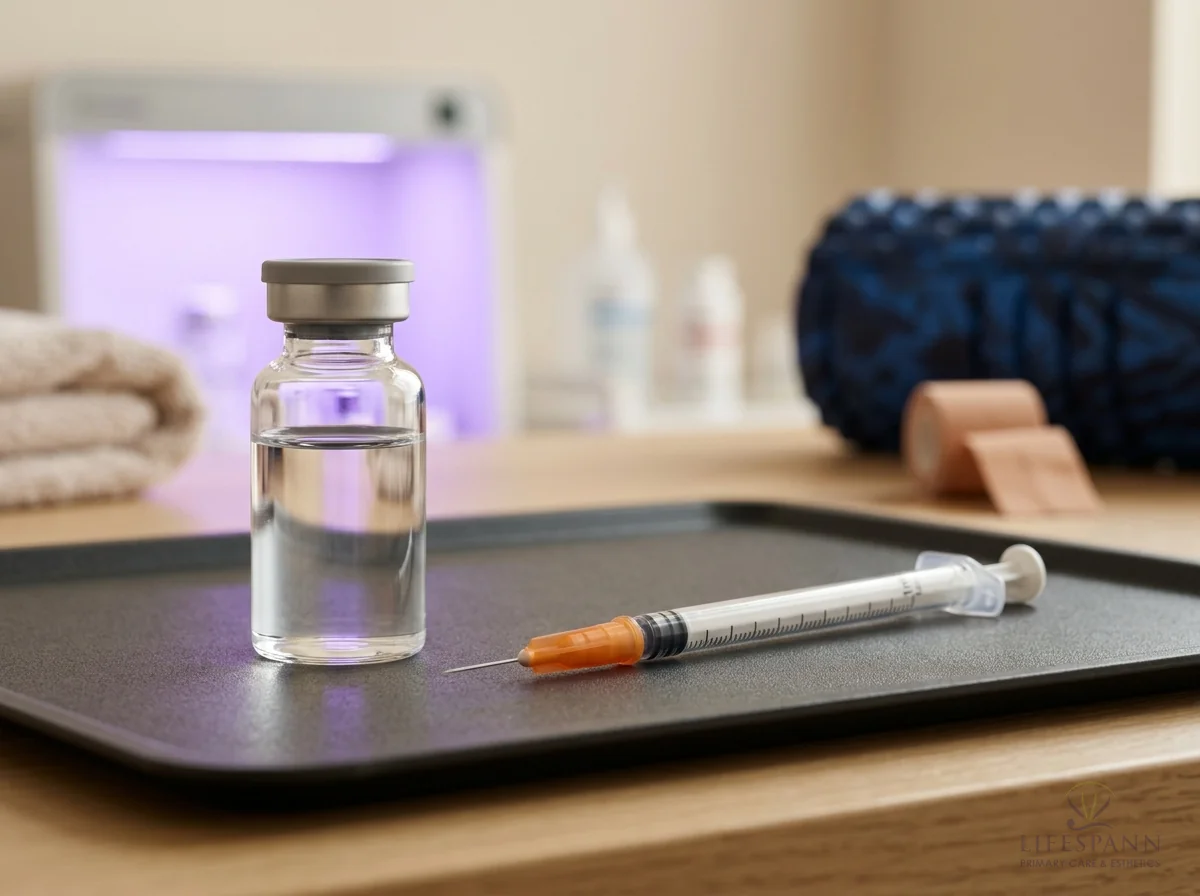
Understand the topic before choosing a treatment
BPC-157 is an experimental peptide often discussed online for tendon, joint and digestive concerns. The useful starting point is the problem you want to solve: an injury that has stopped improving, recurring pain, or persistent digestive symptoms.
Those concerns deserve an explanation and a care plan even when a particular peptide is not appropriate. You can discuss what you have read without deciding on an ingredient before your visit.
This is an educational guide. It does not establish product availability or that this option is suitable for you.
How it works—and what that tells us
Research explores how BPC-157 may influence repair-related signaling in injured tissues. A change in a laboratory pathway is an early research finding; it does not tell us whether a person will recover faster or regain function.
A mechanism explains how something may act.
Clinical studies test benefits and harms in specific people.
Your goals and health history shape the next step.
What the evidence shows
Mostly preclinical; limited human evidence
The FDA briefing evaluates BPC-157 for a proposed ulcerative-colitis use. Laboratory and animal work cannot establish an effective treatment for tendon injuries or other commonly advertised recovery uses.
What it does not establish
- The evidence does not establish a reliable human recovery timeline or a standard treatment for joint, muscle or gut symptoms.
- A compounding advisory discussion is not drug approval or confirmation that a clinic offers a product.
Safety questions worth discussing
- Product identity, impurities and immune reactions are unresolved concerns in the FDA evaluation.
- An injection should not replace assessment of a persistent injury or worsening digestive problem. Tell the clinician about prior imaging, diagnoses and medicines.
Bring your goals to the conversation
You can start with what you want to understand or improve. A consultation can help you assess the research and discuss other approaches; it does not commit you to a particular treatment.
- What diagnosis best explains the problem I am trying to address?
- What established rehabilitation or medical options should I compare?
- What evidence would change the decision about an experimental approach?
Common questions about BPC-157
Does BPC-157 heal a torn tendon?
That claim goes beyond established clinical evidence. A tendon problem needs assessment of the injury, function and appropriate rehabilitation or specialist care.
Are animal studies enough to predict my results?
No. Animal models can identify research questions, but human trials are needed to establish whether a particular product improves meaningful patient outcomes.
Can I request a consultation without choosing BPC-157?
Yes. Start with your recovery or digestive concerns. The conversation is about understanding your goals and options, not committing to this ingredient.
Sources and further reading
- FDA compounding advisory briefing: BPC-157-related substances
U.S. Food and Drug Administration · 2026
The cited sources describe particular products, study populations or research questions. They are not endorsements of a LifeSpann treatment. Meet our team.
Start with your goals. The consultation is free.
Free consultation · No deposit
Talk through what you want to achieve, the evidence, and the options worth considering. You do not need to choose a peptide or commit to treatment.
Our front desk will contact you within one business day to answer questions and schedule your consultation.
Prefer to call? (480) 351-7151