Prepared from
your own blood.
PRF brings together platelets and a forming fibrin network. It is a biological preparation, not a one-size-fits-all product.
See how it works ULTRAFIBRIN® · GILBERT, ARIZONARequest a callback
 ULTRAFIBRIN® (PRF)
A platelet-rich fibrin treatment prepared from your own blood. Explore the possibilities for hair and skin, understand the evidence, and decide with your clinician.
START HERE · THE KEY TAKEAWAYS
PRF brings together platelets and a forming fibrin network. It is a biological preparation, not a one-size-fits-all product.
See how it worksHair growth, facial skin, and hand appearance need different assessments. The evidence is not equally strong for every area.
Understand the evidenceComparable photographs and clinical findings guide the next step. Your results and treatment plan are individual.
What to discussConsidering PRF? Start with a conversation about your goals
HAIR · FACE · HANDS
Explore the photographs together. Lighting, positioning, and treatment details all matter when interpreting a comparison. Individual results vary.
Choose a comparison below.
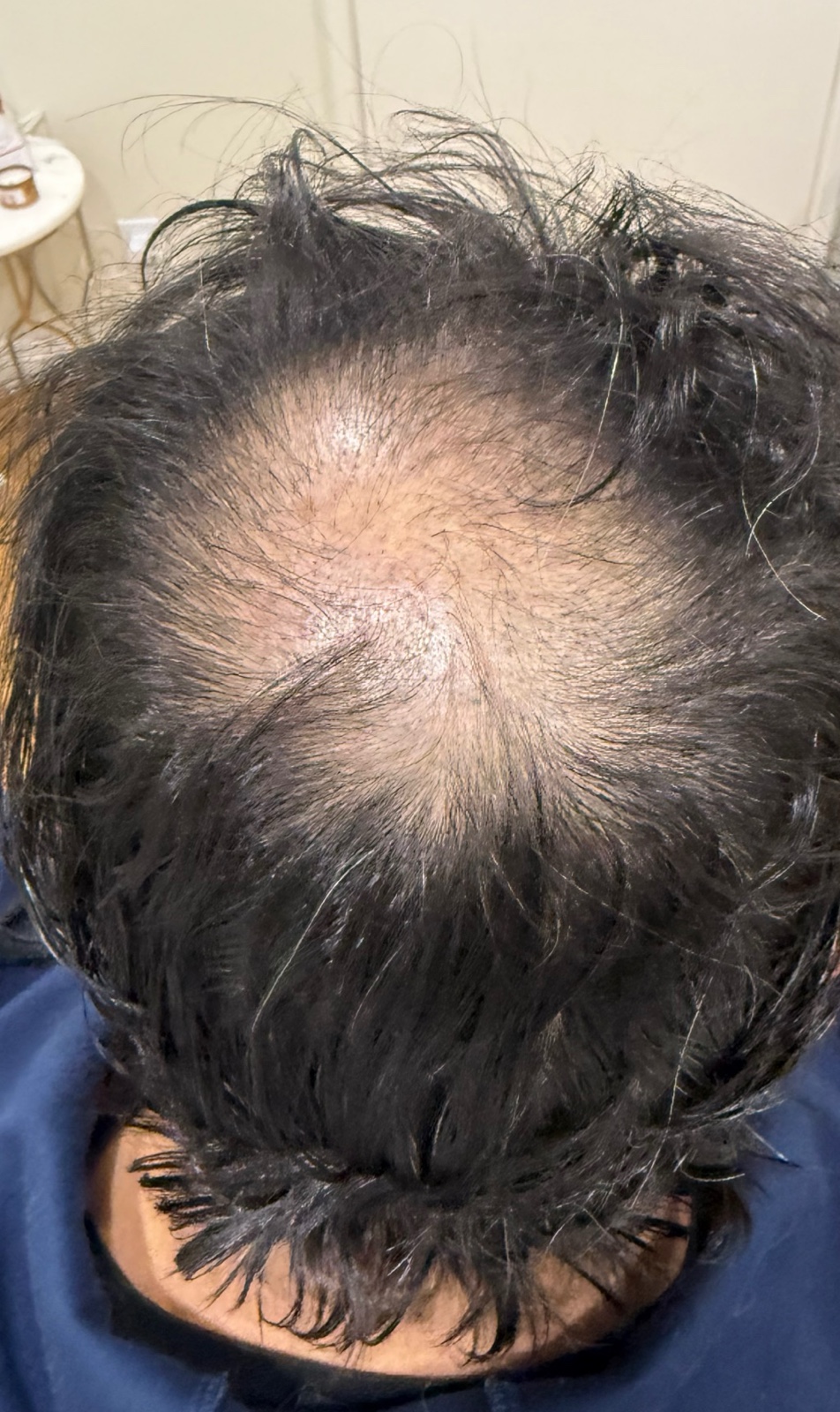
Choose a comparison below.
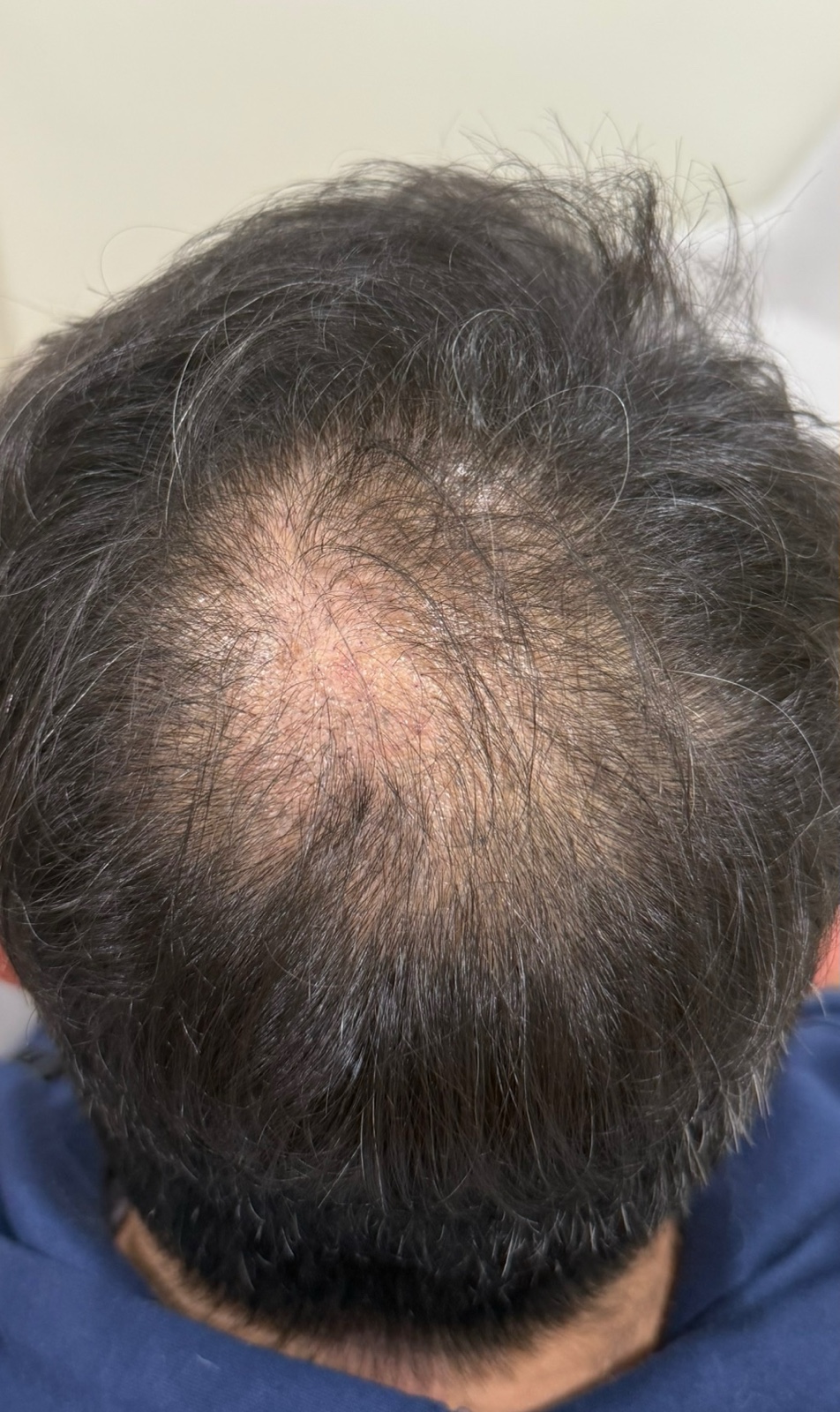
Drag anywhere on the photo to compare. Use the arrow keys when focused.
A treatment journey across repeat visits. Session count and follow-up interval to be confirmed with your clinician. Wetness, styling, and angle differ between photographs.
Photos stay in this browser tab and are not uploaded. Clear them before the next consultation.
Global display adjustments help compare differently lit photographs. They do not establish a treatment effect. Changes stay in this tab; reset to view the original colors.
Original photo colors. Framing has been matched for display.
ULTRAFIBRIN® · THE SCIENCE
Platelet-rich fibrin brings together components of your own blood. Follow the process, then explore why it is considered for each treatment area.
01 / COLLECT
A clinician collects a small blood sample. Platelets carry signaling proteins involved in the body’s repair response.
02 / PREPARE
A centrifuge separates blood components to prepare PRF. In an injectable preparation, a fibrin network forms as the material clots. The preparation method changes what is delivered.
03 / SIGNAL
Fibrin is a temporary protein network that can hold platelets and support the release of their signaling proteins. Researchers study how those signals affect nearby cells; a cellular response does not guarantee a visible result.
04 / REVIEW
Your clinician selects the treatment area and method, then reassesses with you. Comparable photographs and clinical findings help guide further treatment. The number of visits is individualized.
ONE PREPARATION FAMILY. DIFFERENT QUESTIONS.
Changes in density, shedding, or the width of a part start with understanding why the hair is changing. Different causes need different care.
Platelets release signaling proteins involved in repair. For hair, researchers are studying whether a PRF preparation can support the environment around existing follicles.
Small studies have reported changes in hair density and thickness in selected patterns of hair loss. They cannot predict your response or establish that new follicles will form.
2025 hair studyTexture, fine lines, and changes in facial contours can have different causes. The treatment discussion starts with the change you want to address.
Fibroblasts are cells that make collagen, part of the skin’s supporting structure. In laboratory research, fluid PRF influenced fibroblast activity and collagen production.
A small uncontrolled study of injectable PRF reported improvements in some skin measures and satisfaction. Wrinkle and texture changes were not statistically significant. This does not establish the same results for microneedling or topical application.
2020 facial skin studySkin texture and the visibility of tendons or veins are different concerns. Your clinician can assess the skin and underlying volume before discussing an approach.
PRF is considered for its repair-signaling and fibrin biology. Skin-cell research offers a reason to investigate it, but a mechanism alone does not show how much the appearance of hands will change.
The laboratory and facial studies linked here do not establish hand-specific outcomes. Discuss that uncertainty, the exact treatment method, and the alternatives with your clinician.
2019 skin-cell laboratory studyThese sources study specific PRF preparations, not UltraFibrin as a brand. Injection and microneedling are different methods; your clinician will explain the proposed approach. A biological rationale does not guarantee a visible result.
THE SCIENCE · ONE LAYER DEEPER
PRF is studied for the signals platelets release and the fibrin structure around them. Here is what those words mean.
Growth factors are proteins that help cells communicate during repair. They are signals—not new hair follicles or a supply of replacement skin.
This temporary protein mesh is part of clotting. PRF preparations are studied for how that structure holds cells and releases signaling proteins.
Fibroblasts help make the skin’s supporting matrix, including collagen. Their response to PRF in a laboratory supports investigation—not a guaranteed visible change.
The important distinction: biological activity explains why PRF is being studied. Human clinical studies are needed to learn whether that translates into meaningful benefit. Explore the laboratory sources
PDGF means platelet-derived growth factor; TGF-β1 means transforming growth factor beta 1; VEGF means vascular endothelial growth factor. Studies also measure signals such as EGF and IGF. These are research measurements, not a standardized ingredient label for your treatment.
Finding more of a signaling protein does not automatically mean a better cosmetic result. The preparation, tissue, delivery method, and patient response all matter. Read the growth-factor experiment
READ THE EVIDENCE, NOT JUST THE HEADLINE
A curated selection of primary studies, including encouraging findings and important limits. Open any study to see what was tested, what changed, and what it cannot tell us.
PRF is not PRP. Injectable PRF, solid PRF clots, platelet-rich fibrin matrix, and PRP are not interchangeable. These studies test particular preparations—not UltraFibrin® as a brand.
How it is delivered matters. An injection study does not establish the same outcome for topical use, microneedling, or radiofrequency microneedling.
HUMAN EVIDENCE · DEVELOPING
Clinical studies suggest potential benefit for selected patterns of hair loss. A newer randomized comparison adds useful evidence, but it does not answer every question about suitability or durability.
Li et al. · Journal of Dermatological Treatment · online April 2026
Yao et al. · Archives of Dermatological Research · 2025
Sharma et al. · Journal of Cosmetic and Laser Therapy · 2024
HUMAN EVIDENCE · SMALL, MIXED STUDIES
Researchers have measured pores, spots, surface smoothness, and ultrasound changes. Improvement in one measure does not establish improvement in every concern.
Majewska et al. · Dermatologic Therapy · 2024
Atsu et al. · Dermatologic Therapy · 2023
Hassan et al. · Journal of Cosmetic Dermatology · 2020
HAND-SPECIFIC PRF OUTCOMES · UNCERTAIN
The PRF studies selected here do not establish cosmetic hand outcomes. The clinical conversation should distinguish skin texture from underlying volume and compare alternatives.
Pincelli et al. · Dermatologic Surgery · 2024
LABORATORY EVIDENCE · MECHANISM
Laboratory studies help explain the rationale and why preparation matters. They cannot tell us the size, timing, or likelihood of a visible result in a patient.
Wang et al. · Journal of Cosmetic Dermatology · 2019
Fujioka-Kobayashi et al. · Journal of Periodontology · 2017
Kobayashi et al. · Clinical Oral Investigations · 2016
Primary-source links checked September 10, 2026. Selected research, not an exhaustive review or a medical endorsement. This page is patient education; your clinician assesses suitability.
YOUR VISIT, STEP BY STEP
Your goals, the treatment area, and your health history shape the conversation.
Discuss hair or skin changes, relevant health history, and previous treatments. Your clinician assesses what may be contributing.
Discuss whether PRF belongs in your plan, what alternatives exist, and the benefits, uncertainty, cost, and risks.
Agree on consistent photographs and a follow-up plan. Reassess based on your experience and clinical findings.
ROOM FOR YOUR QUESTIONS
Use your visit to understand the options, the limits, and what makes sense for you.
Platelet-rich fibrin (PRF) is a preparation made from your own blood. It contains platelets and forms a fibrin network. UltraFibrin® is the treatment name used here. PRF methods vary, and platelet-rich plasma (PRP) is a different preparation. Research on one method does not establish outcomes for every method.
For hair, understanding the cause of shedding or thinning comes first. For face and hands, discuss whether the concern is skin texture, volume, or something else. Your clinician reviews your health history and the evidence, then compares the proposed method with alternatives.
There is no guaranteed response or fixed result date. Ask how your clinician will set review points, compare standardized photographs, and decide whether to continue or adjust your plan. A photograph alone cannot establish how many days have passed.
Blood collection, injections, and microneedling can be uncomfortable. Pain, redness, swelling, and bruising can occur; bleeding and infection are also possible. Injection risks depend on the area and include rare injury to blood vessels or surrounding tissue. Your clinician will discuss the specific risks, medicines, and aftercare relevant to your plan.
Cost depends on the area, method, and proposed plan. Review the current LifeSpann menu and confirm what is included with your clinician. Discuss the complete plan cost before proceeding; a series is not automatically appropriate for everyone.
YOUR NEXT STEP
Review your goals, ask your questions, and agree on a plan with your clinician.
Request a PRF callback Explore the current treatment menu