Retatrutide
Triple Agonist. The Future of Weight Loss.
What It Treats
How It Works
Retatrutide simultaneously activates GLP-1, GIP, and glucagon receptors. GLP-1 suppresses appetite. GIP improves fat cell metabolism. Glucagon increases energy expenditure by activating thermogenesis — your body burns more calories at rest.
Mechanism of Action
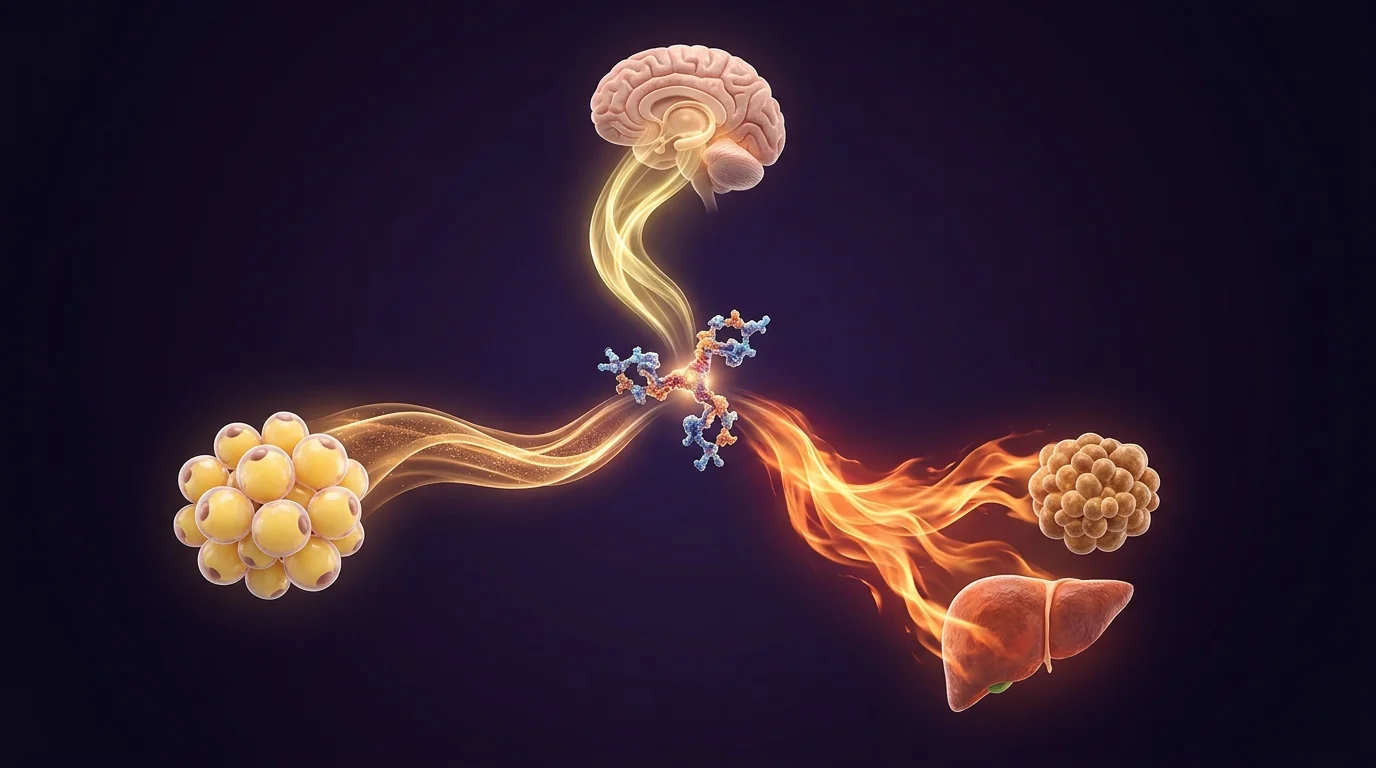
Retatrutide represents the next evolution in metabolic medicine. Where semaglutide activates one receptor (GLP-1) and tirzepatide activates two (GLP-1 + GIP), retatrutide activates three: GLP-1, GIP, and glucagon receptors. The glucagon component is the game-changer — it directly increases energy expenditure by activating thermogenesis in brown fat and the liver. A Phase 2 trial published in the New England Journal of Medicine showed that this triple mechanism produced up to 24.2% body weight loss at 48 weeks — results that were still accelerating at study end, suggesting even greater losses with longer treatment.
In 338 adults with BMI 30+ (or 27+ with comorbidities), retatrutide produced dose-dependent weight loss up to 24.2% at the 12mg dose over 48 weeks — the largest weight reduction reported for any anti-obesity medication in clinical trials. Weight loss trajectories had not plateaued at study end, suggesting even greater reductions with longer treatment. 100% of participants at the highest dose lost at least 5% body weight, and 83% lost at least 15%.
In a prespecified analysis of the Phase 2 trial, retatrutide reduced liver fat by over 80% in participants with metabolic dysfunction-associated steatotic liver disease (MASLD). At the 12mg dose, 93% of participants achieved complete resolution of liver steatosis (below 5% liver fat). The glucagon receptor component drives direct hepatic fat oxidation, positioning retatrutide as a potential treatment for fatty liver disease beyond obesity alone.
The Results
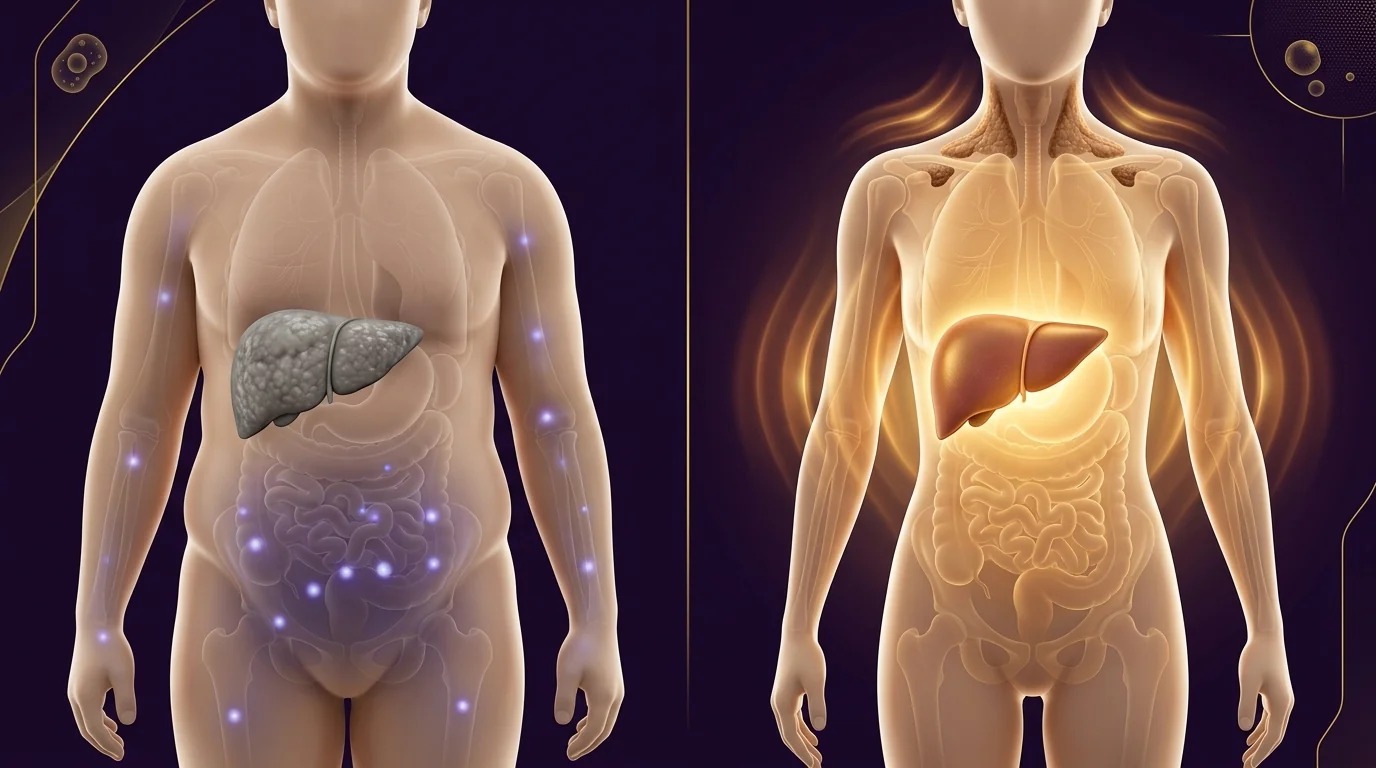
The Phase 2 dose-finding trial was remarkable not just for the weight loss numbers, but for the metabolic improvements across the board. At the highest dose (12mg), participants saw profound reductions in liver fat — an effect attributed to the glucagon receptor activation that drives hepatic fat oxidation. The results suggest retatrutide may be particularly effective for patients with fatty liver disease alongside obesity. As a triple agonist, it addresses obesity from three simultaneous angles: reduced appetite (GLP-1), improved fat metabolism (GIP), and increased energy expenditure (glucagon).
Preclinical and early clinical data demonstrate that triple agonism produces superior weight loss and metabolic improvements compared to dual or single agonists. Glucagon receptor activation contributes incremental energy expenditure of 200-400 kcal/day through hepatic and brown fat thermogenesis, explaining the enhanced weight loss observed clinically. The triple mechanism also uniquely reduces liver fat through direct glucagon-mediated hepatic fat oxidation.
Ideal For
Patients seeking the most aggressive medical weight loss available, those with significant obesity (BMI 35+), fatty liver disease, or those who haven't achieved goal weight with dual-agonist therapy.
Ready to Start Retatrutide?
Add this to your plan so we can confirm the right protocol, pricing, and next steps at your consultation. Or book directly.
Cancellation Policy: A $50 non-refundable deposit is required to confirm your appointment for all consultations — our front desk will reach out to collect it after you book. The deposit is applied toward your visit cost. We require at least 24 hours' notice for cancellations or changes. No-shows or late cancellations will forfeit the deposit. By booking, you agree to these terms.
Business hours: Mon–Thu 8am–6pm · Fri 8am–12pm