Fenbendazole + Ivermectin
Antiparasitic + Adjunctive Cancer Support.
What It Treats
How It Works
Fenbendazole disrupts microtubule assembly by binding beta-tubulin (the same target as chemotherapy drugs taxol and vincristine), stabilizes tumor suppressor p53, and interferes with cellular glucose uptake. Ivermectin binds glutamate-gated chloride channels and inhibits the Wnt/β-catenin and AKT/mTOR cancer signaling pathways. The dual mechanism attacks rapidly dividing cells from multiple angles simultaneously.
Mechanism of Action
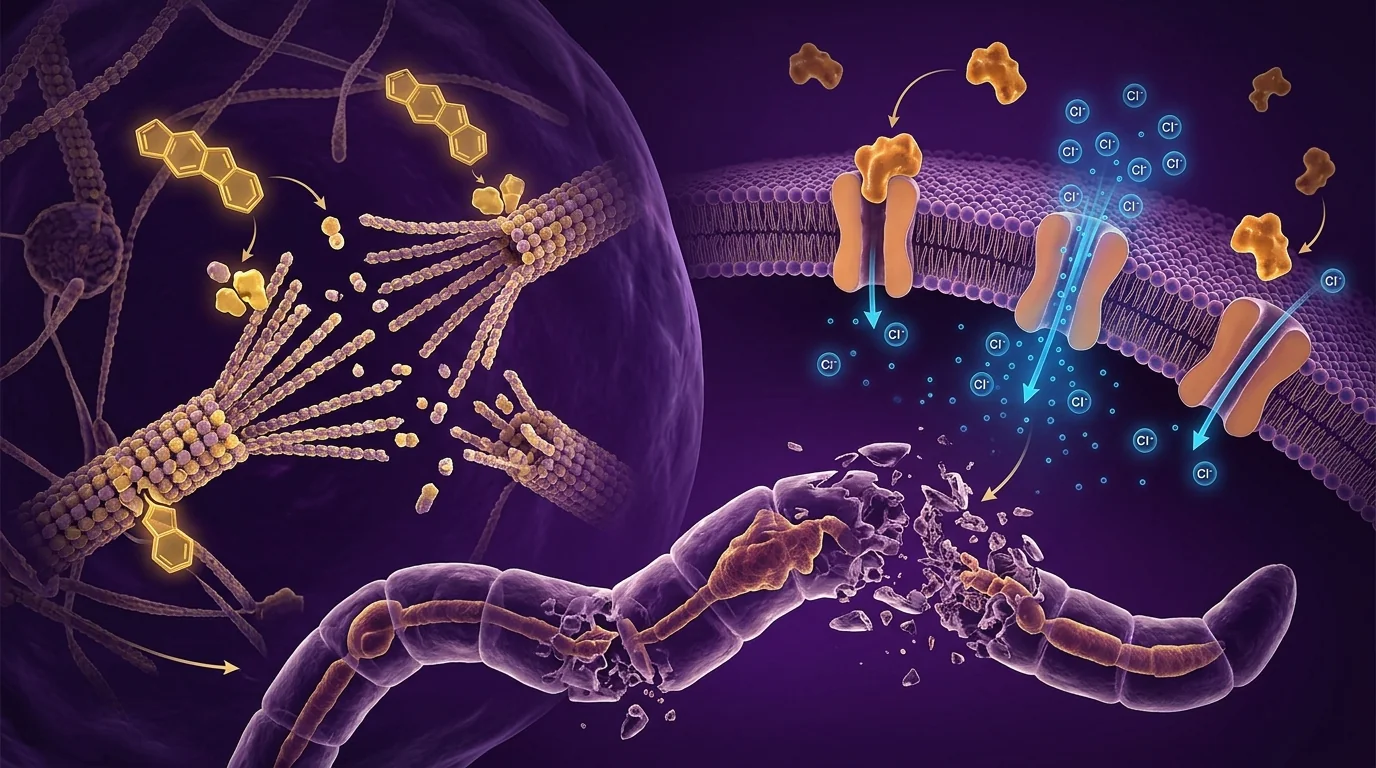
Fenbendazole and ivermectin are two well-established antiparasitic agents that work through completely different mechanisms — and emerging research shows both have significant anticancer properties as well. Fenbendazole binds to beta-tubulin, the same structural protein that cancer cells depend on for cell division (this is the same target as chemotherapy drugs like taxol and vincristine). Without functional microtubules, cells cannot divide — the mitotic spindle fails, and the cell undergoes apoptosis. A landmark study in Nature Scientific Reports showed fenbendazole caused cancer cell death through three simultaneous mechanisms: microtubule disruption, p53 stabilization, and interference with glucose uptake. Ivermectin attacks from a different angle: beyond its antiparasitic action on chloride channels, research in Pharmacological Research demonstrated it inhibits the Wnt/β-catenin and AKT/mTOR pathways — two of the most critical signaling cascades that cancer cells hijack for uncontrolled growth. Together, these agents create a dual assault: fenbendazole collapses the cell's structural machinery and starves it of glucose, while ivermectin shuts down the growth signaling pathways that drive proliferation.
Fenbendazole caused cancer cell death through three simultaneous mechanisms: disruption of microtubule dynamics by binding beta-tubulin (the same target as taxol), stabilization of tumor suppressor p53 leading to apoptosis, and reduction of glucose transporter GLUT4 expression — effectively starving cancer cells of their preferred fuel. The compound showed activity against multiple cancer cell lines including non-small cell lung cancer, with minimal toxicity to normal cells.
Comprehensive review of ivermectin's anticancer mechanisms demonstrated inhibition of Wnt/β-catenin pathway (critical in colorectal and breast cancers), suppression of AKT/mTOR signaling (a master regulator of cell growth), induction of autophagy-dependent cell death, and enhancement of conventional chemotherapy efficacy. Multiple in vivo studies showed tumor growth inhibition at doses achievable with standard antiparasitic dosing.
The Transformation
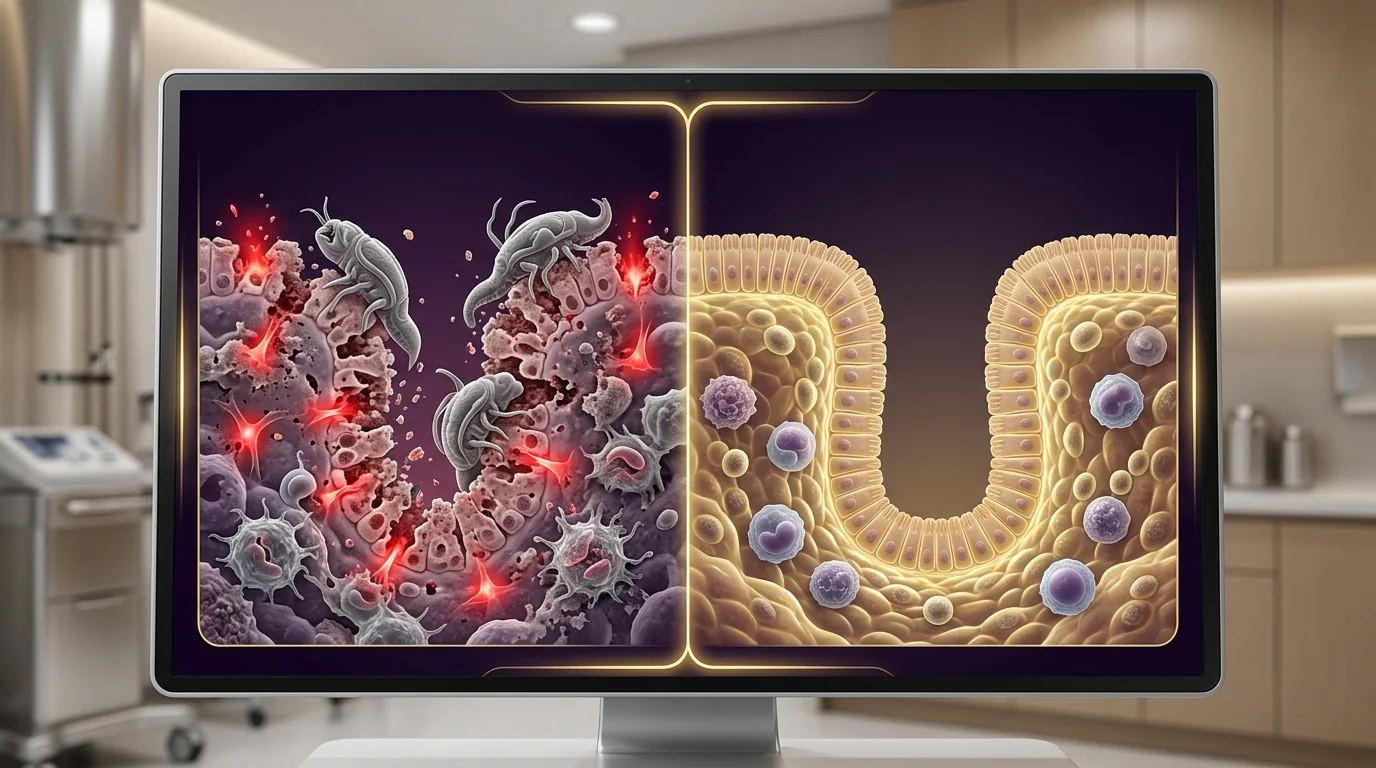
This combination serves two patient populations with overlapping biology. For parasitic infections: organisms are eliminated through structural collapse (fenbendazole) and membrane paralysis (ivermectin), restoring gut barrier integrity and immune function. For adjunctive cancer support: the same mechanisms that destroy parasitic cells also target cancer cells — both are rapidly dividing cells dependent on microtubule assembly, both have altered glucose metabolism, and both exploit immune suppression to survive. On the left: active parasitic burden or abnormal cell proliferation with chronic inflammation, immune suppression, and tissue disruption. On the right: after a complete protocol, parasitic organisms cleared, abnormal cell proliferation checked, immune function restored, and inflammation resolved. A growing body of case reports and preclinical evidence supports this dual-use approach, with fenbendazole gaining particular attention after multiple documented cancer remission cases.
Review of drug repurposing strategies highlighted fenbendazole and ivermectin among the most promising antiparasitic agents with anticancer activity. Both drugs have established safety profiles from decades of human use, well-characterized mechanisms that overlap with validated cancer drug targets, and growing preclinical evidence supporting combination approaches that attack cancer through multiple independent pathways.
Ideal For
Patients with parasitic infections, those seeking adjunctive support alongside conventional cancer treatment, chronic unexplained GI symptoms, post-travel illness, immune dysfunction, and patients interested in repurposed drug protocols supported by emerging research.
Your Protocol
Oral protocol: Fenbendazole 222mg daily for 3 consecutive days per week, combined with Ivermectin 0.2-0.4mg/kg as a single dose, repeated at 2-week intervals. Typical course: 4-8 weeks depending on infection type and severity. Lab monitoring includes CBC, liver function, and stool studies. Provider supervision required throughout.
Ready to Start Fenbendazole + Ivermectin?
Add to your plan and bundle with other services to save 15%. Or book directly.
Cancellation Policy: A $50 non-refundable deposit is required to confirm your appointment for all consultations — our front desk will reach out to collect it after you book. The deposit is applied toward your visit cost. We require at least 24 hours' notice for cancellations or changes. No-shows or late cancellations will forfeit the deposit. By booking, you agree to these terms.
Business hours: Mon–Thu 8am–6pm · Fri 8am–12pm