ARA-290 (Cibinetide)
Comfort, movement and everyday function matter when nerve symptoms affect your life. If ARA-290 research interests you, we can help you understand what has been studied and how to discuss it alongside your existing care.
Start with a free consultation.
No deposit. Our Gilbert team will contact you within one business day.

Explore ARA-290 (Cibinetide)
Explore ARA-290 and small-fiber neuropathy research, with a conversation about nerve symptoms, comfort and daily function.
ARA-290, also called cibinetide, is an investigational peptide studied in tissue-protection signaling and small-fiber neuropathy. Early human research includes a small randomized pilot trial in people with sarcoidosis-associated symptoms.
Burning, tingling and altered sensation deserve a conversation about their cause and impact. Bring your diagnosis, medicines and priorities so you can explore the research while keeping your established treatment and specialist follow-up in view.
What to expect from your free consultation
A conversation about your goals, the research and care options. Bring your questions; you can explore the possibilities without choosing a peptide or combination in advance.
Discuss what you want to change and how it affects your day.
Understand the science, relevant evidence and currently available approaches.
Discuss suitability and whether a further evaluation or care option fits your goals.
Free consultation, no deposit. Request a conversation below; our front desk contacts you within one business day to schedule.
Request your free consultationThe science behind ARA-290 (Cibinetide)
ARA-290 was designed from an erythropoietin-related structure to investigate tissue-protective signaling separately from red-blood-cell stimulation. That design aim is not proof that all erythropoietin-related risks or other safety concerns are absent.
The setting for nerve-signaling research
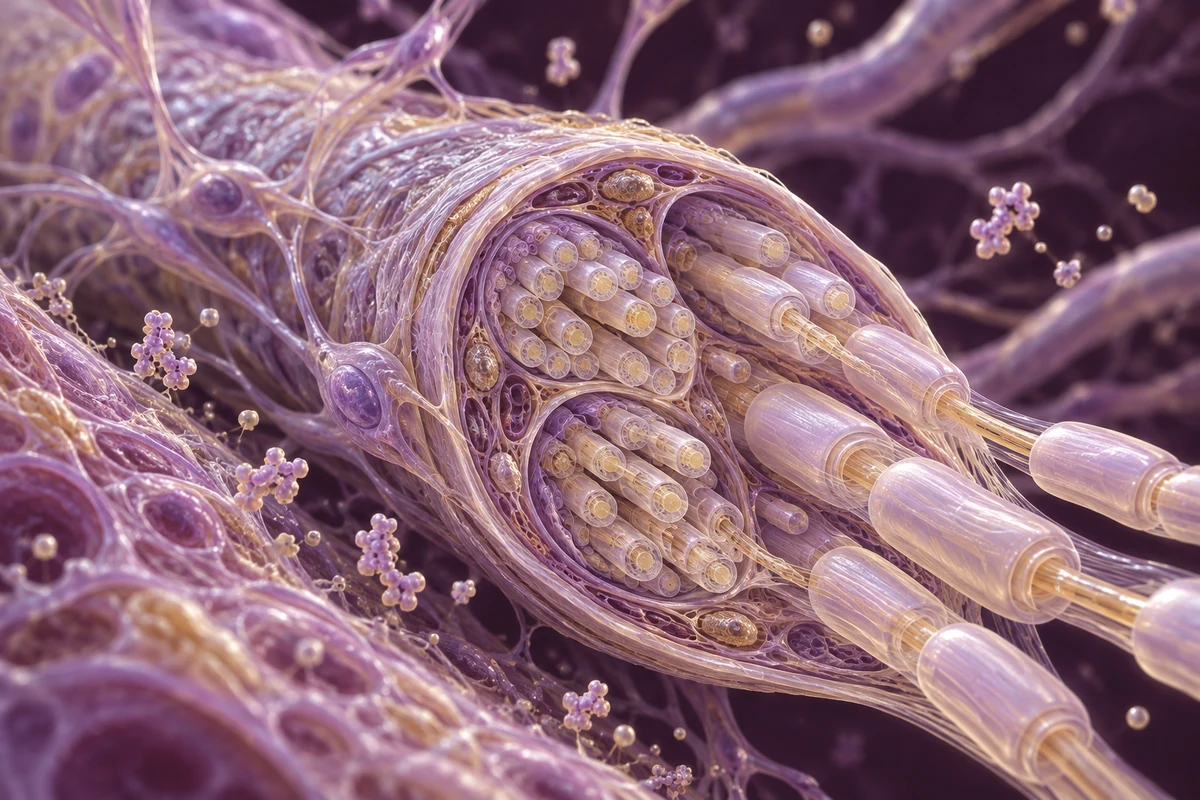
Read the illustration
- Peripheral nerves
Small nerve fibers carry sensory and autonomic signals.
- ARA-290 design
An erythropoietin-derived peptide studied for tissue-protective signaling.
- Human research
A small pilot trial investigated symptoms in a specific sarcoidosis population.
The nerve scene introduces peripheral-nerve research. The cited pilot trial concerned a specific sarcoidosis population. Colors and structures are simplified for illustration.
Read the original researchWhat the evidence shows
Small randomized pilot trial
A placebo-controlled pilot study enrolled twenty-two people with sarcoidosis and small-fiber neuropathy symptoms. It explored safety and symptom measures; the findings do not establish a treatment for every neuropathy or prove durable nerve regeneration.
Where the Research Is Still Developing
- Sarcoidosis-associated neuropathy research cannot automatically be generalized to diabetic, chemotherapy-related or unexplained nerve symptoms.
- Short, small trials cannot settle uncommon adverse effects or longer-term outcomes.
Safety & Your Care Options
Your clinician reviews suitability and current treatment availability with you. Some topics here involve investigational compounds; a research guide is not an offer to prescribe every product described.
- Do not stop prescribed neuropathy treatment or specialist follow-up based on an experimental-peptide claim.
- New weakness or a rapid change in neurologic function needs prompt clinical evaluation.
Bring your goals to the conversation
Tell us what you want to achieve and what you have already tried. We’ll help you put the research in context, compare available approaches and plan your next step. You do not need to arrive with a peptide selected.
- Has the cause of my nerve symptoms been established?
- What outcomes have the relevant human trials actually measured?
- What established treatments and specialist assessments should I consider?
Considering ARA-290 (Cibinetide)? Start here.
Explore your options and what to expect from a conversation with LifeSpann.
Can I explore ARA-290 if I have questions about nerve symptoms?
Yes. Bring your existing diagnosis, symptoms and the activities affected. We can help you understand the research and prepare questions about your options alongside the clinician already managing your nerve-related care.
What is the most useful way to read the ARA-290 studies?
Look at the condition and outcome studied. Small human pilot studies in sarcoidosis-associated neuropathy are an early research signal; they do not establish lasting nerve regeneration or benefit for every cause of neuropathy. ARA-290 is also distinct from erythropoietin itself.
Can this conversation fit alongside my current neuropathy care?
Yes. Bring your treatment plan, medicines and relevant testing so the discussion reflects your actual situation. You can explore research without stopping current care or committing to an experimental ingredient.
What does the free consultation include?
Start with a conversation about your goals, the research and available care options. The peptide education consultation is free, with no deposit or purchase required. You do not need to choose a peptide first. Any recommended testing or treatment and its cost are discussed separately before you decide.
How do I get started with LifeSpann?
Use the consultation request form with your name, phone and email. Our front desk will contact you within one business day to answer scheduling questions and arrange your visit. You can save your health details for the clinical conversation. Sending the form requests a callback; your appointment is confirmed when we schedule it with you.
Sources and further reading
- ARA 290 in sarcoidosis-associated small fiber neuropathy: randomized pilot trial
Molecular Medicine via PubMed · 2012
Read the original studies and guidance behind this page. Findings apply to the products and populations studied. Meet our team.
Start with your goals. The consultation is free.
Free consultation · No deposit
Bring your goals and questions. We’ll explore the research, your health priorities and the available care options together. You do not need to choose a peptide first.
Our front desk will contact you within one business day to answer questions and schedule your consultation.
Prefer to call? (480) 351-7151